AI-powered conversion rate optimization
10 minutes
Today, with any successful business having an online presence, attracting traffic to your website is crucial. Moreover, that’s only the first step, since the real challenge lies in converting that traffic into revenue. We don’t recommend relying solely on traditional conversion rate optimization (CRO) methods like manual A/B testing and heuristic analysis. They are good but only as a support, not a primary resource. As user expectations grow and behavior becomes increasingly complex, businesses need smarter tools to optimize their digital experiences. More specifically, technologies like AI and ML come into play.
AI-powered CRO introduces a new paradigm, enabling businesses to make data-driven decisions in real time. In this article, we’ll explore how artificial intelligence for CRO works, what it delivers, and why companies are turning to partners like Laconica to implement these solutions.
The secret to successful AI conversion rate optimization is intelligent machine learning (ML) algorithms and data analytics. While the classic CRO approach relies heavily on human logic and even intuition, AI in digital marketing goes beyond surface-level tweaks, using constantly updated real-time data from various sources, including user behavior, device type, location, and more. The result is an effective solution for converting ordinary website and app visitors into paying customers.
Before we share specific tips, let's examine how machine learning for CRO helps businesses attract more paying customers.
AI tools are far superior to humans and capable of analyzing millions of user sessions, clicks, and interactions, identifying behavioral patterns in a matter of minutes or even seconds. This speeds up user conversion and also helps you see opportunities that a human analyst might miss. For example, AI can determine that customers in a certain region are more likely to abandon their shopping carts on Android devices and suggest targeted changes to address the issue.
A McKinsey study found that businesses using advanced analytics to explore customer behavior achieved a 15–20% increase in ROI from digital initiatives.
Innovative technologies play a big role in e-commerce, allowing businesses to optimize conversions with AI. You won’t have to do anything yourself; modern technologies will take care of all the work, freeing up your resources for more strategic tasks.
For instance, AI-based personalization tools can easily adapt the shopping experience and CTAs to user behavior. Moreover, they constantly update their algorithms so that your customers receive offers that are truly interesting to them at that moment.
Examples of AI in e-commerce conversion via smart personalization:
All these actions will help you convert your users and ultimately improve sales with AI.
By the way, adding AI-powered visual search is another good idea to boost conversions! We discuss this in more detail in the linked article.
Do you want to know which users you have the best chance of converting into a paying audience? If so, implement predictive analytics for CRO. Taking into account a variety of variables, from page views and time spent on site to the source of the referral, these solutions assign an objective score to each lead, helping companies prioritize their marketing and sales activities.
QA is an integral part of web and mobile development and further support. With AI, you can simplify this process from start to finish, including expert testing of the most promising advertising campaigns and the most successful versions of the website or mobile app in terms of conversions. What's more, AI runs thousands of experiments simultaneously, which means you’re able to adapt marketing initiatives in real time without your actual participation.
According to Forrester, businesses that use AI to improve testing reduce optimization cycles by 25-30%.
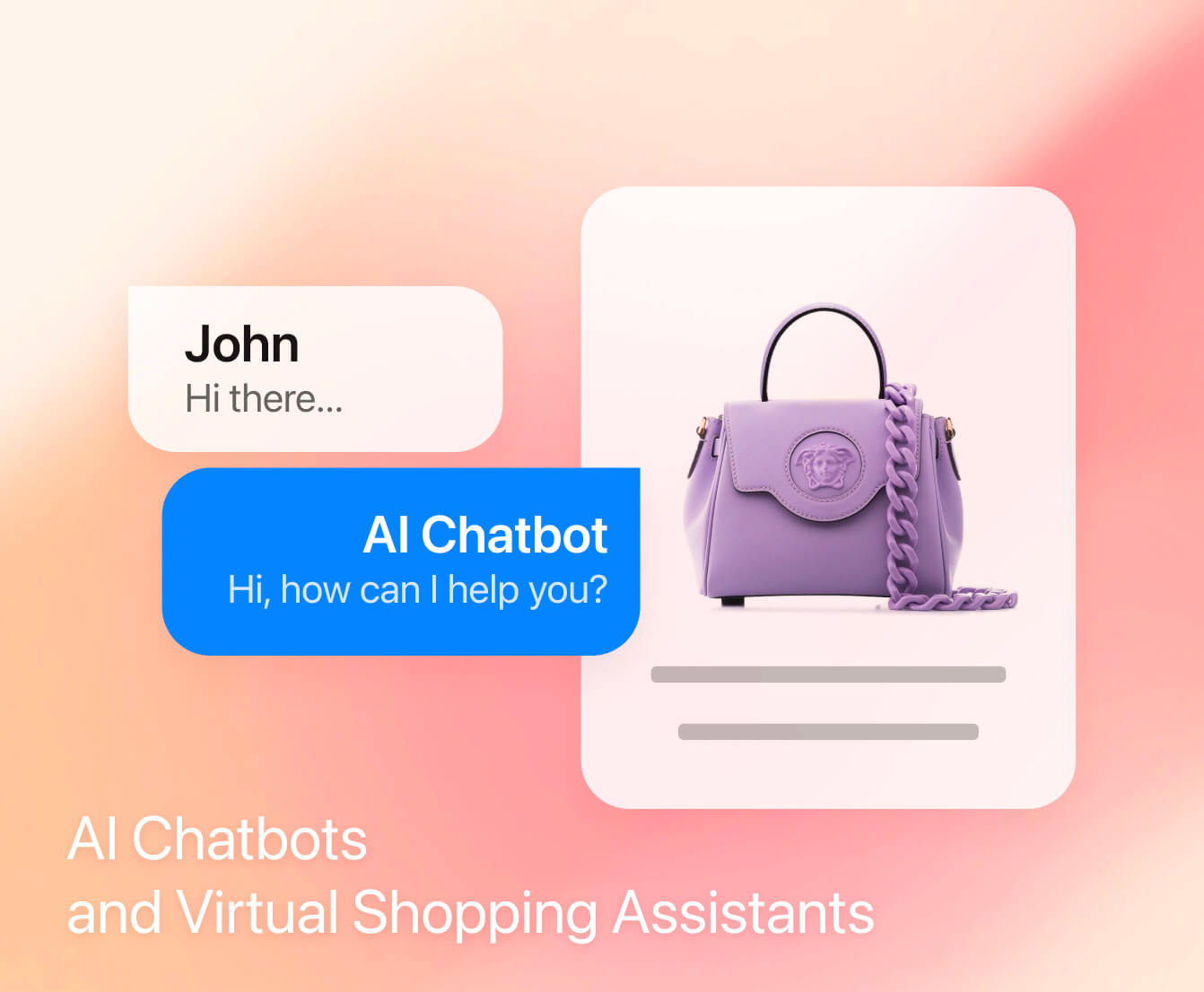
24/7 customer communication and instant responses to their queries are essential for converting your audience. Of course, a human team is unlikely to cope with round-the-clock support, so it's high time to implement chatbots with AI capabilities. They've already become an excellent solution for AI conversion rate optimization, answering questions, eliminating objections, and pushing users to a CTA.
Use case: A SaaS provider implementing chatbot support saw a 18% increase in trial-to-paid conversions.
Sure, traditional heatmaps also show user browsing behavior—like where they click or scroll—but AI-powered CRO doesn’t stop there. It can interpret these patterns and automatically suggest corrective UI changes, giving you space for other tasks.
Any business would benefit from AI-powered CRO solutions, at least by automating the processes of attracting and converting users into paying customers. However, some domains will see the fastest ROI after AI website optimization.
If we haven’t convinced you to optimize conversions with AI yet, we suggest you take a look at the real KPIs of other companies.
These improvements look impressive, right? Still further, they often translate to six- or seven-figure revenue increases, depending on scale.
If you’re imagining AI-powered conversion optimization as a single smart tool that “just works,” here’s the truth: it’s a whole and complicated system, not a feature. And like any system, it needs a smart foundation, moving parts, and someone who knows how to wire them together-the way we at Laconica do.
At the first stage, the primary task is to understand how users interact with your website, from the most popular pages to the duration of each session. In other words, it’s about capturing contextual behavior data:
This data is usually collected via tools like Segment, Heap, or custom JavaScript listeners you build into the frontend.
✅ By the way, that’s where you might need a dev team to wire up clean, structured event data that’s usable downstream.
So, you have relevant contextual behavior data, but what to do with it? Without proper analysis, it remains interesting but useless information. Of course, a human team can analyze it too, but predictive AI models will cope with this task faster, freeing up your resources for more important endeavors.
Using machine learning libraries like scikit-learn, XGBoost, or cloud-based ML APIs, the system predicts outcomes like:
To make these calls, the models learn from past data — often via logistic regression, decision trees, or even deep learning if the dataset is large enough.
✅ Here, a developer or ML engineer sets up model training or connects to third-party ML APIs (like AWS Personalize or Google Vertex AI).
Once you know what’s likely to happen, you bring in LLMs (like GPT-4, Claude, or Gemini) to Once you know what is likely to happen, you bring in LLMs (like GPT-4, Claude, or Gemini) to control the outcome, namely:
That is, you instruct the AI system to respond to the customer’s needs in real time—informed by behavioral signals and conversion intent.
✅ Developers integrate these models via API and structure the prompt logic to ensure relevant, on-brand outputs.
Now we need to connect the dots, so to speak, and configure a real decision engine. Its task is to evaluate all the moving parts:
The logic might live in a personalization platform (e.g., VWO with AI) or in a custom middleware layer (built with Node.js or Python) that runs decision trees in real time.
✅ Developers orchestrate the logic, building the infrastructure that decides which variant of content is shown to each user, and when.
This is where the rubber meets the road. The optimized experience gets delivered to the user in milliseconds.
All this happens via SSR (server-side rendering) or client-side hydration, depending on your stack.
✅ Here, front-end developers ensure that everything loads fast, is SEO-safe, and doesn’t feel like Frankenstein's UX.
The greatest feature of this system is its ability to evolve over time: every time a user converts (or fails to convert), your AI assistant learns new things and adapts to new conditions.
If you want to go full-stack, this involves data pipelines, feature stores, and retraining workflows—or you can use managed tools like Evidently, Prefect, or DataRobot.
✅ Developers enable this loop by wiring up event tracking, storing results, and automating updates.
Sure, some SaaS tools offer “AI CRO” out of the box. But if you want real control and results, here’s where developers matter:
As you now understand, the best way to succeed in sales, customer retention, etc. (choose the right one) is to seek help from professionals—those who know how to use artificial intelligence and machine learning for CRO correctly. And if you've not yet found the right team, we offer our services.
At Laconica, we specialize in AI-based technology solutions tailored to your specific goals. Our approach is not plug-and-play—we build custom tools designed for your data, infrastructure, and customer journey and train and optimize them with your unique business logic in mind.

Here's an example from our practice. A medium-sized fashion retailer approached our team with complaints about stagnant conversion rates (1.8%) and high cart abandonment (68%). We analyzed their request and offered a full-stack AI-powered CRO solution:
After just 80 days, real results appeared, namely:
This case illustrates how even modest traffic gains can translate into substantial financial results when powered by AI.
Using artificial intelligence for CRO doesn't require a complete overhaul of your website or app, but rather a small upgrade of your system through intelligent technologies. Still, let's make sure you have what it takes to get off to a good start:
If these are in place, AI can begin delivering value within weeks, not months.
We've prepared a special eCommerce CRO checklist for you: audits and tactical tests that deliver results.
The reality is as simple as pie: traffic without conversion is wasted potential. AI website optimization turns data into decisions, and decisions into revenue. Simply put, intelligent technologies give you all the means to create highly personalized, scalable, and effective user experiences that continually adapt to market behavior.
And if you need a reliable tech partner for your AI-powered CRO journey, you're welcome to Laconica! We skillfully create customized AI systems that easily integrate into your digital strategy—be it behavioral analytics, predictive models, or intelligent testing frameworks. We know how to help you convert more, faster, and better.
Contact Laconica today to learn how we can engineer an AI-CRO solution that turns your visitors into long-term customers.

Written by:
Co-founder / CEO, Laconica
Volodymyr co-founded Laconica in 2014 after seven years as a UI/UX designer for global brands. Since then he has led 100+ Magento and Shopify projects, from migrations to AI visibility and CRO. He writes about what actually moves revenue for online stores, based on client work, not theory.

Reviewed by:
Co-founder / CTO, Laconica
Anna reviews every article on this blog for technical accuracy before it goes live. She has 20 years in software engineering, 15 of them in Magento and eCommerce. Before Laconica she was a C# developer and team lead at large enterprise companies. As CTO she leads the engineering team and oversees Magento 2, Hyvä and Shopify architecture on every client project. If a number or a code claim is in the article, she has checked it.