Magento to Shopify
7 minutes read
Every year marks the beginning of new achievements and possible challenges along the way. Are you ready for them as an e-commerce business owner? For example, what about the platform powering your online store? Have you already chosen one?
According to the latest data, the most popular solutions today are Shopify and Magento, each targeting its own audience. So, Shopify vs Magento: What would be best for your project?
We invite you to discuss this topic from our multi-year experience and the upcoming e-commerce trends.
“It doesn’t matter what platform I use for my online store!” You might argue with us. “My product is good, and that’s the main thing!”
We wish it were true! However, it's not only WHAT you sell that matters but also HOW you sell it. After all, what's the point of having a top-notch product if a customer has difficulty finding it in the online catalog or if your website loads too slowly? Both are easy ways to irritate users and make them leave; moreover, they often go straight to your competitors.
Sounds scary? Well, that’s why you should carefully choose your e-commerce platform. According to our experience, it can make all the difference.
By the way, don't worry if your initial choice was wrong and now you see that another system would be more suitable for your requirements. You can always move to another platform. There have been many Magento to Shopify migration projects and vice versa in our practice, so we're happy to help you, too, whenever you need our professional assistance.
Wanna know more about Magento migration? We've prepared a special piece on this topic, so follow the link for details right away!
We guess it's no secret to you that 2020 was a turning point for e-commerce. The coronavirus and the lockdown it caused resulted in explosive global growth in online sales: 46% compared to 2019. As people became accustomed to online shopping during the pandemic and had no intention of giving it up, the industry continued to proliferate.
To finally convince you how important choosing the right e-commerce platform for your online store is, we’d like to share a few useful Insider Intelligence predictions with you:
We hope we've convinced you that sales of the future will inevitably be online, which is why you should take your niche in the digital world while it's still possible. The best place to start is by selecting a platform that can ensure your e-commerce business's growth and become a long-term investment.
Let’s go deeper and show with examples why it's worth weighing all the pros and cons before choosing a certain solution:
As you can see, the choice is tough and important, going far beyond just a technically advantageous solution. It's a strategic move that directly affects your e-commerce business. Moreover, you may need professional Magento and Shopify development services, provided you agree with us that these two platforms lead today's market.
Okay, it’s time to discuss these giants in more detail so that you understand how they’ve earned their popularity and become the top choice in the current market. What do they offer e-commerce businesses? What makes them different?
There is no winner in the Shopify vs Magento battle, for each platform is good in its own way. The trick is to figure out what you actually need and make the right move.
Quick to start, easy to maintain, and requiring no technical skills for management, Shopify is the perfect option for small and medium businesses.
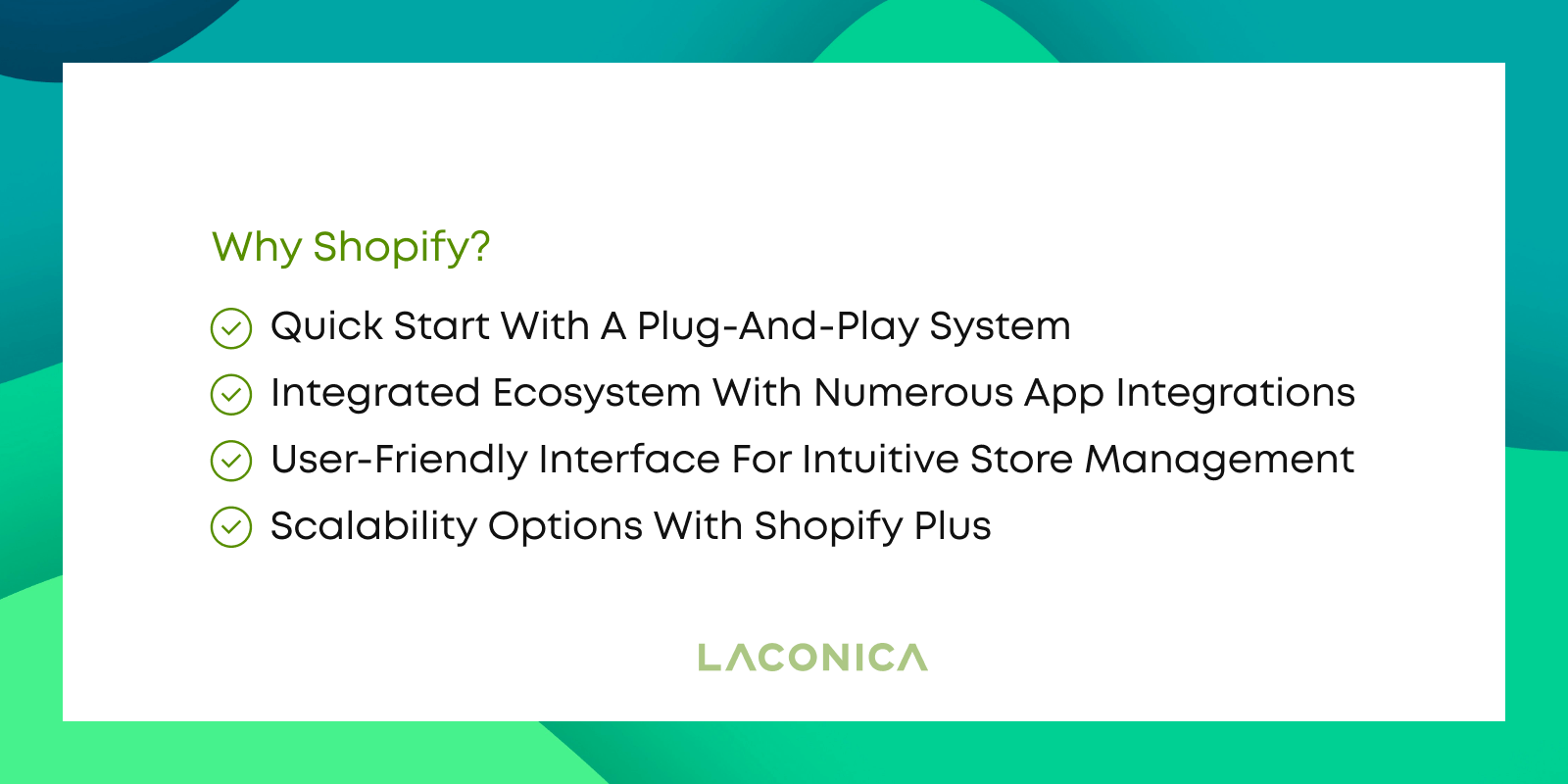
So, if you serve a small number of customers and are looking for a simple solution to streamline the entire cycle, from launch to further maintenance, you need Shopify development services. Otherwise, Magento is a go-for choice.
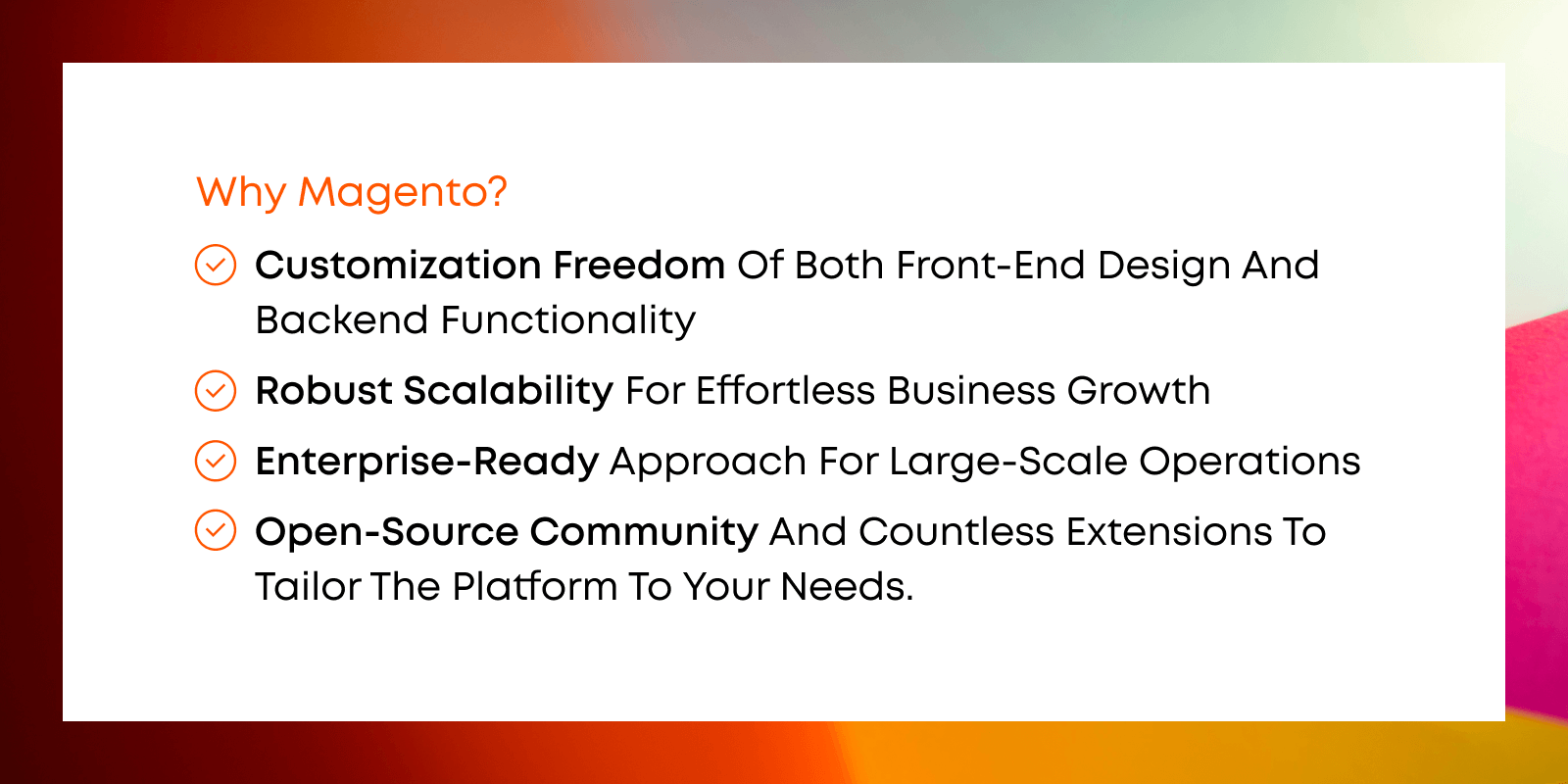
Magento, an open-source system, is aimed at companies interested in growth, requiring high flexibility and unique customization, and looking for a solution that can give them 100% control over e-commerce operations.
By the way, we have some good news for you. As you might know, some companies used to complain that Magento’s overloaded frontend could slow down the website’s speed. Now, however, the problem is over, and your project isn’t at risk anymore. All you have to do is implement the Hyvä theme, which skyrockets the online store's performance by minimizing JavaScript usage and leaving only crucial third-party dependencies.
Explore all Hyvä benefits in this highly nuanced article. Follow the link if you’re interested in details.
As a Silver Partner of Hyvä, Laconica has access to additional perks and valuable bonuses of this innovative front-end solution, which we can use for our clients’ benefit. After all, switching to a new theme is a much more cost-effective project than a full-fledged Magento to Shopify migration.
Our Shopify vs Magento comparison has reached a very important point: scalability. Let's face it: even if you didn't initially plan to develop your e-commerce project, the situation might change, leading to a traffic boost, catalog extension, and other factors accompanying business growth. Are Shopify and Magento ready for this increased load?
In short, yes, they are, although Shopify and Magento approach the scaling issue differently. Let's figure out how exactly.
As you may have already understood, Shopify focuses more on startups and small and medium-sized businesses. However, this doesn’t mean the platform has no plan for your possible growth.
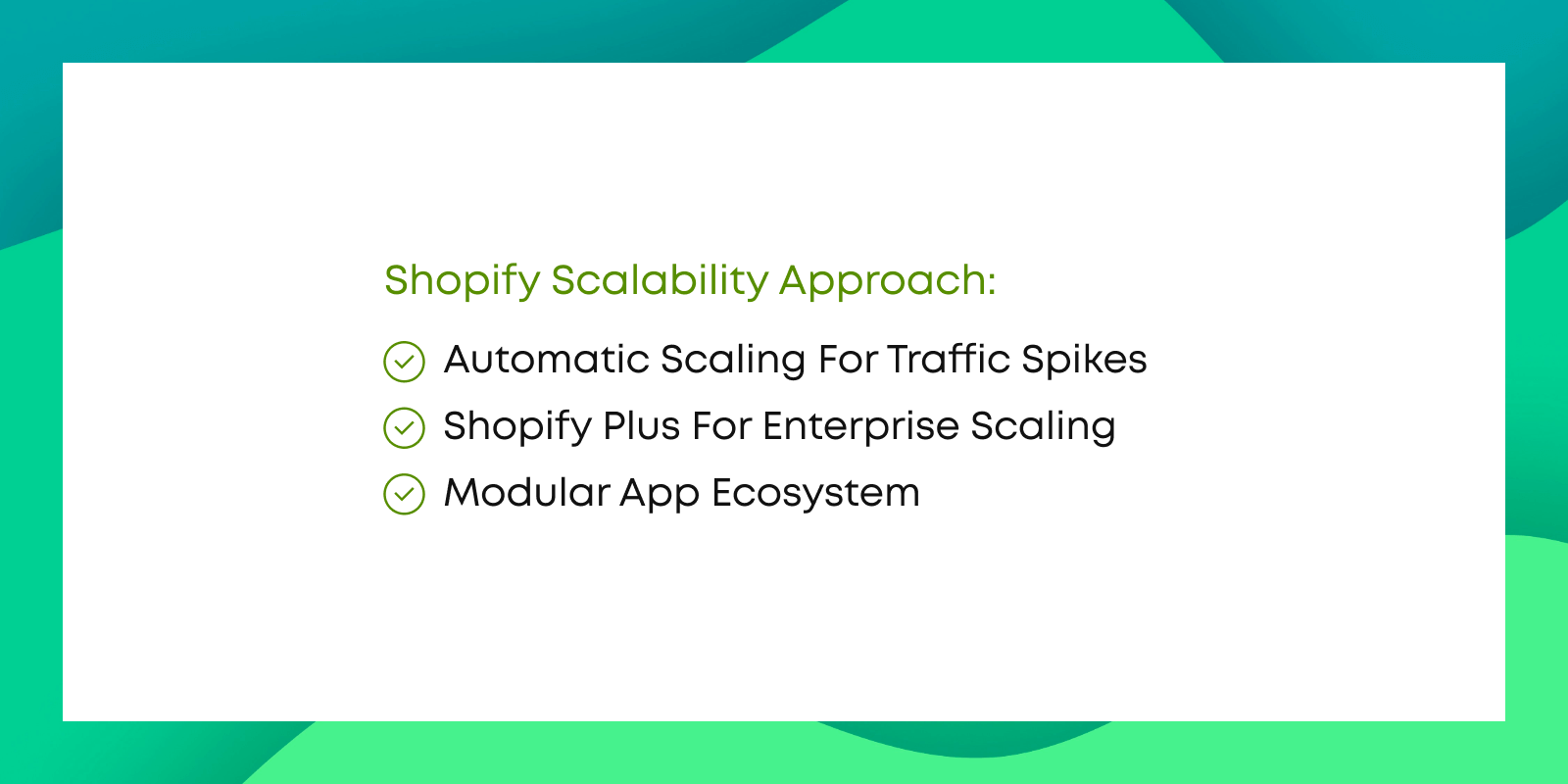
First, Shopify supports peak loads, which are inevitable for any e-commerce business that deals with heavy holiday sales and gift-giving periods. The platform also offers a large library of apps to extend the functionality of your online store as you scale your business.
But if we're talking about big games like enterprise scaling, then you’ll have to subscribe to Shopify Plus, which comes with higher costs. Alas, nothing else will do.
As they say, there's a flip side to everything, and in Shopify's case, it's limited customization options. And you may need these options because business growth means new requirements and responsibilities that even the extensive library of Shopify apps cannot always fully meet as Magento does.
Also, keep in mind that you'll likely need Shopify development services, especially if you want to create a unique user experience.
Unlike Shopify, Magento provides perfect conditions for unparalleled business growth, which makes it a great solution for e-commerce enterprises. It covers the most tricky workflows that become more complex as your company scales.
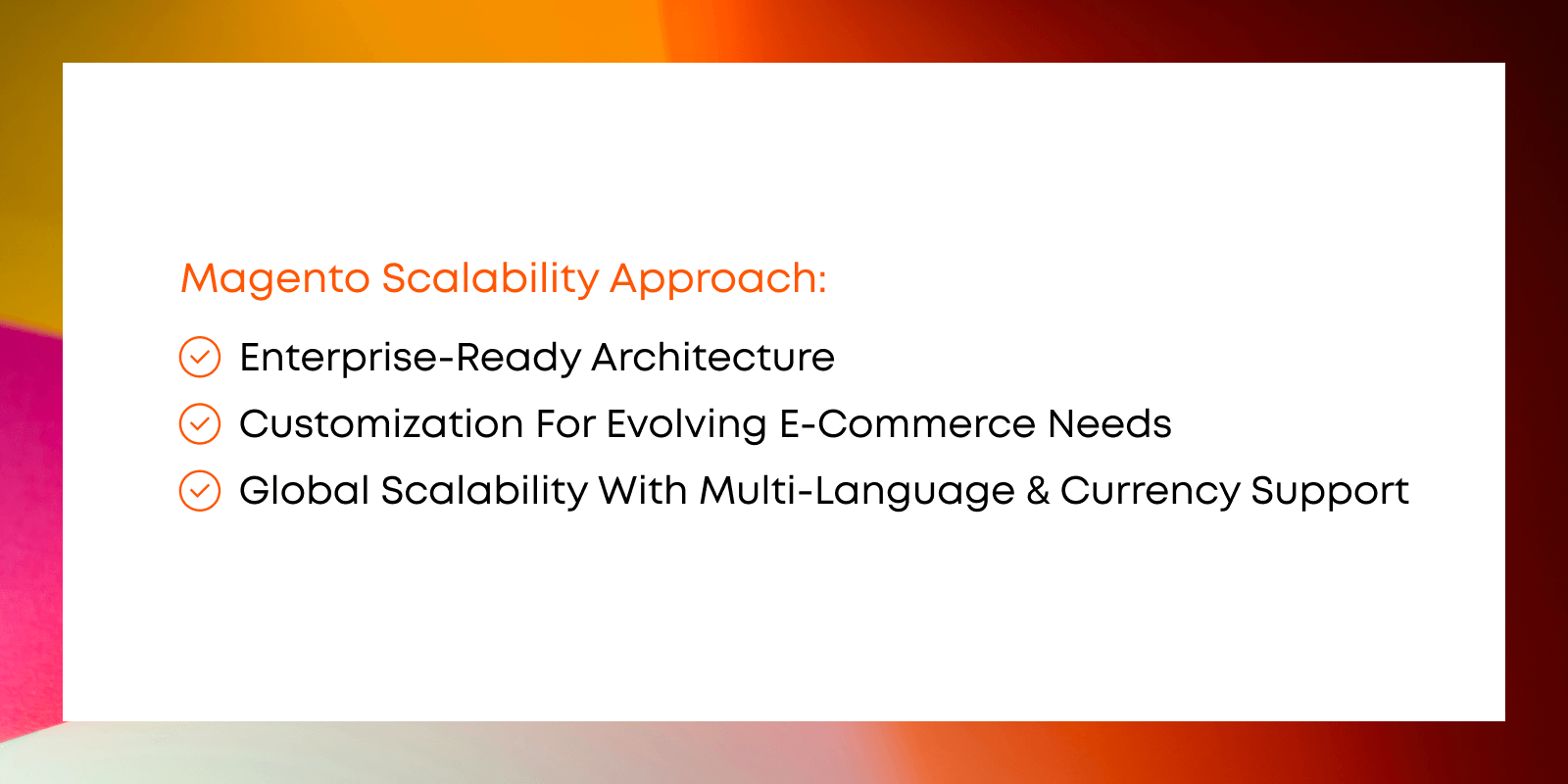
To sum it up, Magento is fully prepared for any surprises following business growth, including the company's possible entry into foreign markets (hence the support of different languages and currencies). You can easily add new features and implement complex integrations, knowing that your online store will withstand greater traffic and cope with the influx of customers even on Black Friday.
Since Magento is a self-hosted platform, you must set up and maintain a server infrastructure. This can be rather costly, especially as your business becomes bigger and requires supporting more customers and products (which means increased data processing).
In terms of project scalability, the choice between these two platforms is simple:
As we've already told you, if you understand that your chosen platform poorly fits your scaling goals, don’t worry—just make a switch: it's not easy but quite feasible. For this, initiate a Magento to Shopify migration or, conversely, move to Magento. It all depends on your growth plans and related needs.
Sure, scalability is important, but it's not the only choice-determining factor. You have to manage your online store and work with it daily, and it's best if you do so as easily as breathing.
What can Magento and Shopify offer us for further management and maintenance?
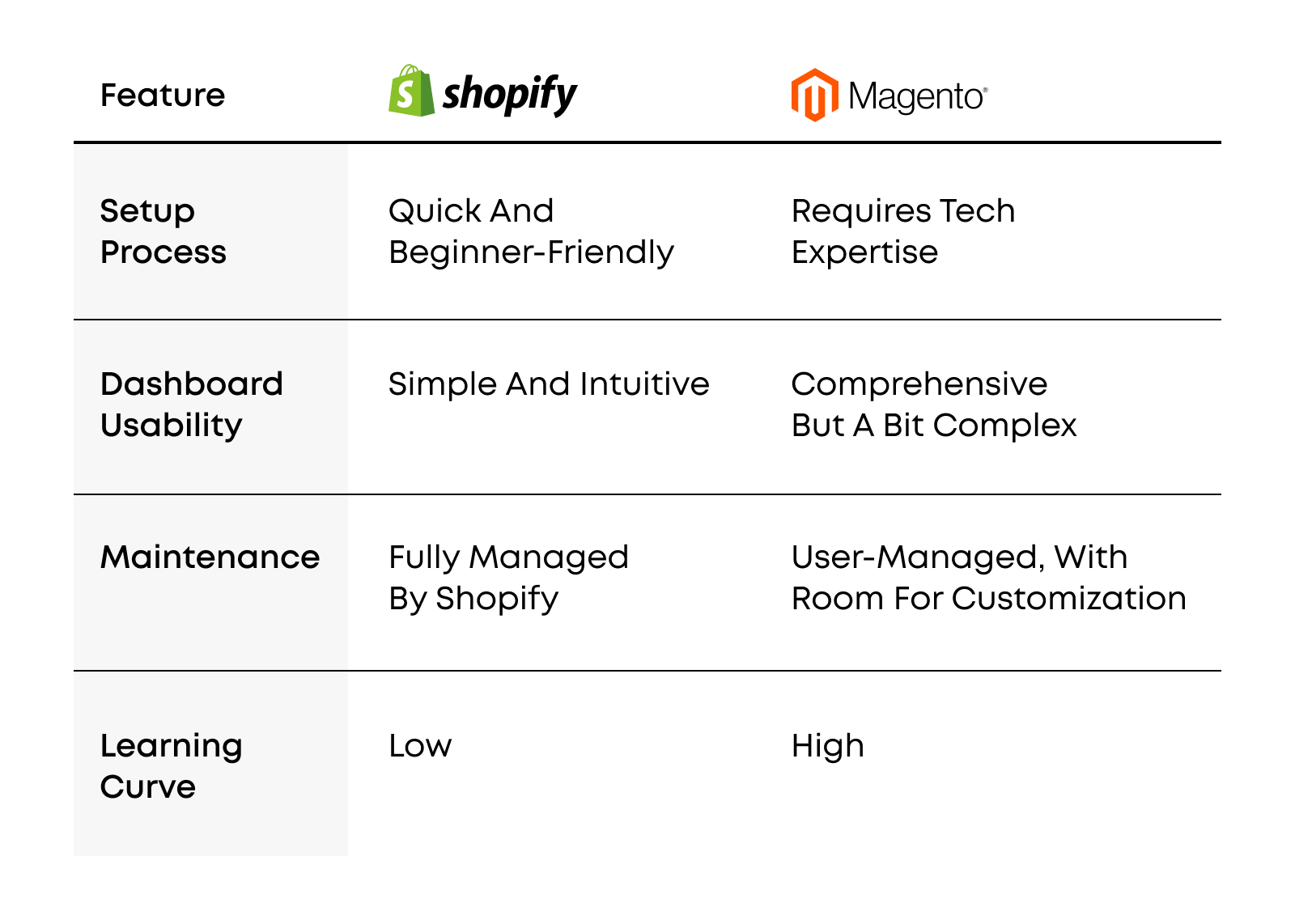
If ease of use is your main concern, then Shopify is definitely the way to go, as it applies a plug-and-play approach and caters to customers without tech skills. As a SaaS platform, Shopify takes care of every detail of your journey and offers a step-by-step onboarding process.
Magento is not as easy to use as Shopify and requires some technical knowledge and expertise. That's the fair price of higher flexibility and wider customization options.
Also, don’t forget about Magento's self-hosted nature, which somehow complicates online store management, too.
However, if you run a large e-commerce company, you 100% have an IT department, so they will be the ones handling all the technical stuff.
The Shopify vs Magento discussion would be incomplete without touching on the cost issue. You must plan your budget in advance, so we can’t avoid the money topic.
If you sell to businesses rather than consumers, the Magento vs Shopify comparison changes completely. B2B commerce brings requirements that most B2C stores never face: company accounts with multiple buyers, negotiated pricing per customer, quote workflows, huge SKU catalogs, and deep ERP integration. Let's look at how each platform handles them — honestly.
Magento (Open Source with extensions, or Adobe Commerce natively) supports company structures out of the box: a company account can contain multiple buyers with different roles, approval rules, and credit limits. A purchasing manager places orders, a finance lead approves them, and the owner sees everything — all within one account.
Shopify used to rely on third-party apps for this, but that has changed: since B2B on Shopify became part of the Plus plan, company profiles with multiple buyers, locations, and role-based permissions are native. The catch: this is a Shopify Plus feature — from $2,300/month on a three-year term. On standard Shopify plans, you're back to apps and workarounds.
Magento handles negotiated pricing natively and at any scale: customer group pricing, tier pricing, shared catalogs with custom price books per company. If you have 500 wholesale customers each with their own price list, Magento was built for exactly this.
Shopify Plus now offers company-level price lists, quantity rules, and volume discounts — genuinely usable for straightforward wholesale. But complex scenarios (price rules depending on region + customer group + order history, or pricing synced from ERP per SKU per customer) still push against the platform's limits and often require custom apps.
In many B2B niches, buyers don't click «Add to cart» — they request a quote, negotiate, and then order. Magentosupports negotiable quotes natively (Adobe Commerce) or via mature extensions: a buyer submits a cart as a quote, a sales rep counters, versions are tracked, and the approved quote converts to an order.
Shopify added draft orders and some quote-adjacent features, but a full RFQ negotiation cycle typically means a third-party app or custom development. For quote-heavy businesses — industrial equipment, building materials, custom manufacturing — this is often the single deciding factor in favor of Magento. It's exactly the kind of workflow we built for Alcon Lighting, a US commercial lighting distributor, where an advanced quote calculator sits at the center of the buying experience.
Magento comfortably runs catalogs with hundreds of thousands of SKUs, layered categories, configurable products with dozens of attributes, and multi-store setups sharing one catalog. Shopify has raised its variant limits (up to 2,048 variants per product on newer APIs) and handles large catalogs far better than a few years ago, but complex product logic — configurable bundles, dynamic attributes, per-region catalogs — still requires more workarounds than Magento's native EAV model.
B2B commerce rarely lives alone: there's an ERP holding inventory and pricing, a CRM, sometimes a PIM. Magento'sopen codebase means an integration can do literally anything — custom middleware, real-time sync, complex business rules. We've built Magento integrations with SAP, Microsoft Dynamics, NetSuite, Xero, and QuickBooks that run for years.
Shopify offers polished connectors for mainstream systems and a solid API, but you work within API rate limits and the boundaries of what the platform exposes. For standard integrations, it's actually faster to launch. For non-standard ones, Magento gives you room Shopify can't.
Honesty time. Shopify Plus B2B has matured a lot, and we recommend it to B2B merchants when:
But when your B2B flows include RFQ negotiation, ERP-driven pricing, approval chains, or six-figure SKU counts — Magento remains the platform that does it natively rather than through a patchwork of apps
Our Shopify vs Magento comparison is over, and it’s time for final thoughts.
So… what should you choose for your online store?
At Laconica, we've partnered with e-commerce businesses for over a decade, delivering a wide range of software engineering solutions — from building online stores from the ground up to handling complex migrations and modernization efforts. To illustrate our expertise, we’ll share a real-world example of a Magento to Shopify migration project we successfully completed.
One of our recent clients, a mid-sized D2C brand selling customizable office supplies, approached us with a clear mission: migrate away from Magento 1, which was becoming increasingly expensive and time-consuming to maintain.
However, they weren’t convinced about moving to Shopify right away.
The client had concerns about platform flexibility, especially regarding their custom product configurator and integration with a legacy ERP system. They also feared losing control over hosting, data access, and backend customizations — things they had full ownership of with Magento.
We stepped in to evaluate both options with them.
Magento 2 was considered but ruled out due to the high cost of development and infrastructure and the long implementation timeline. Meanwhile, Shopify (plus Shopify Plus) offered a managed, scalable environment with a shorter time to market. We demonstrated how much of the customization could be rebuilt using Shopify’s native capabilities and app ecosystem and where it made sense to build custom apps.
Ultimately, the client chose Shopify and never looked back.
We handled the Magento to Shopify migration end-to-end, including data transfer, redesign, and development of a lightweight custom configurator.
The above example is just one of many projects our Laconica has completed over 10+ years in the e-commerce development market. And not always did clients choose Shopify—for some, Magento 2 proved to be a better option. Each situation is unique and requires proper analysis.
If you want expert help with the final platform choice, you're welcome to Laconica! Our expert team is happy to consult you on all issues and advise you on the best course of action.

Written by:
Co-founder / CEO, Laconica
Volodymyr co-founded Laconica in 2014 after seven years as a UI/UX designer for global brands. Since then he has led 100+ Magento and Shopify projects, from migrations to AI visibility and CRO. He writes about what actually moves revenue for online stores, based on client work, not theory.

Reviewed by:
Co-founder / CTO, Laconica
Anna reviews every article on this blog for technical accuracy before it goes live. She has 20 years in software engineering, 15 of them in Magento and eCommerce. Before Laconica she was a C# developer and team lead at large enterprise companies. As CTO she leads the engineering team and oversees Magento 2, Hyvä and Shopify architecture on every client project. If a number or a code claim is in the article, she has checked it.